What Does a Paid Ads Specialist Do? (Google, Meta, TikTok)
What a paid ads specialist does day to day, which platforms and metrics they own, what they deliver weekly and what they cost.
 Joshua Yanong
·
Published 7 October 2026
·
Updated 7 October 2026
·
13 min read
Joshua Yanong
·
Published 7 October 2026
·
Updated 7 October 2026
·
13 min read
Joshua is the founder of Nomad VAs. He manages local and national SEO campaigns, on-page optimization, and keyword strategy across multiple client accounts, and personally vets every SEO VA the company places.
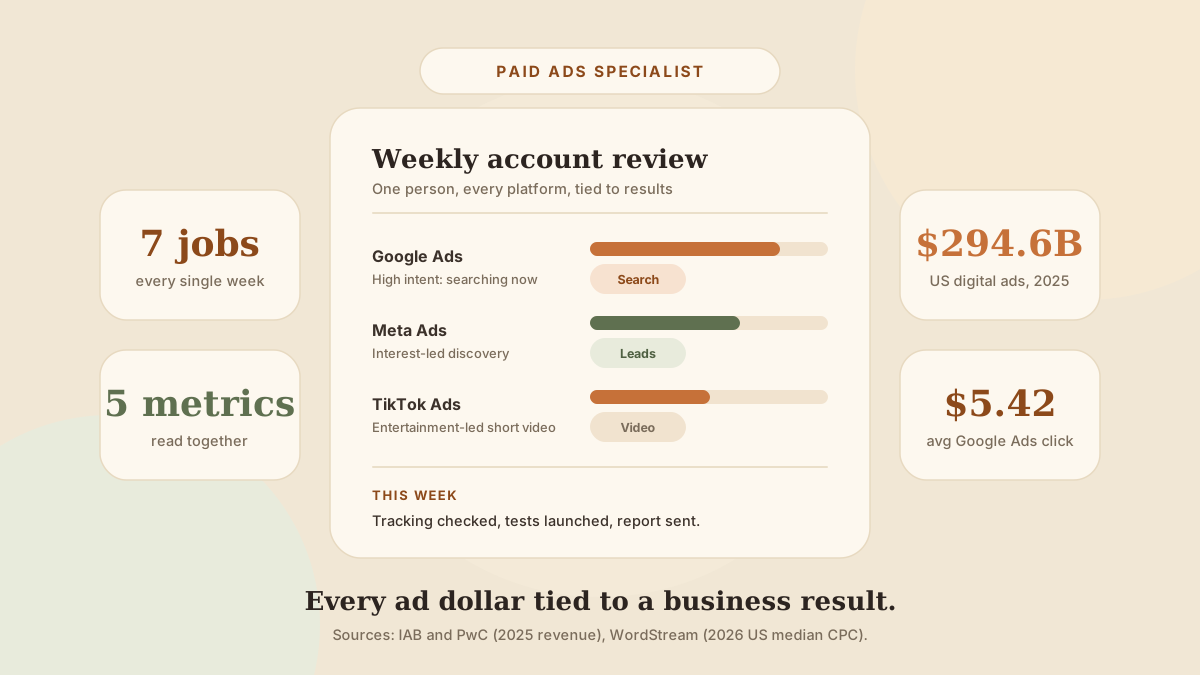
Digital advertising is large and crowded. US digital ad revenue reached $294.6 billion in 2025, up 13.9% year over year, according to the IAB and PwC. When that much money competes for the same audiences, small account-level decisions decide who wins. This guide covers what a paid ads specialist does, the platforms and numbers involved, weekly deliverables, costs, and how to vet a candidate.
What is a paid ads specialist?
A paid ads specialist is a digital marketer who owns the daily management of a business's paid advertising accounts. They turn an ad budget into measurable leads or sales by building campaigns, choosing audiences and bids, testing creative, fixing tracking and reporting results in plain numbers. Most work across Google Ads, Meta (Facebook and Instagram) and TikTok, and many also run LinkedIn and Microsoft Ads. If you want one dedicated to your accounts, you can hire a paid ads specialist through Nomad VAs.
The job title varies by employer, which causes confusion when you hire.
Table 1: Paid ads job titles compared
| Job title | Typical focus | How it differs |
|---|---|---|
| Paid ads specialist | Search and social campaigns across several platforms | Owns the full loop: build, test, optimize, report |
| PPC specialist | Pay-per-click search and shopping, often Google and Microsoft Ads | Narrower, usually search-led |
| Media buyer | Planning and buying placements and budgets, often on social | More emphasis on spend allocation |
| Performance marketer | Acquisition metrics across many channels | Broader, may include email and conversion rate optimization |
Titles overlap, so judge candidates by the accounts they have run.
What does a paid ads specialist do day to day?
Seven responsibilities cover most of the role. Each one has an output you can check.
Table 2: The seven responsibilities of a paid ads specialist
| Responsibility | What the specialist does | What you should see |
|---|---|---|
| Campaign build and structure | Sets objectives, account structure, audiences, bidding and budgets | Clean campaigns mapped to business goals |
| Audience targeting | Builds and refines audiences, exclusions, custom and lookalike lists | Less wasted spend, clearer segments |
| Creative testing | Briefs hooks, angles and formats, runs A/B tests, scales winners | A weekly test log with winners and losers |
| Bidding and budget pacing | Adjusts bids, negative keywords, placements and budget split | Spend that tracks plan and shifts toward what converts |
| Conversion tracking | Audits pixels, tags, GA4 and server-side events | Conversion data you can trust |
| Landing page input | Flags offer and page friction between the click and the conversion | Specific page tests to run |
| Reporting | Reports spend, cost per acquisition, return on ad spend and what changed | A plain-language weekly summary and next-week plan |
The common thread is protecting the signal. Ad platforms optimize toward the conversions they can see, so clean tracking, structure and creative give the algorithms better inputs.
Which ad platforms do these specialists manage?
Each platform reaches people at a different moment, so the specialist matches the objective to the platform. The table shows 2026 US medians from WordStream, based on 13,474 Google search campaigns and almost 1,800 Facebook campaigns.
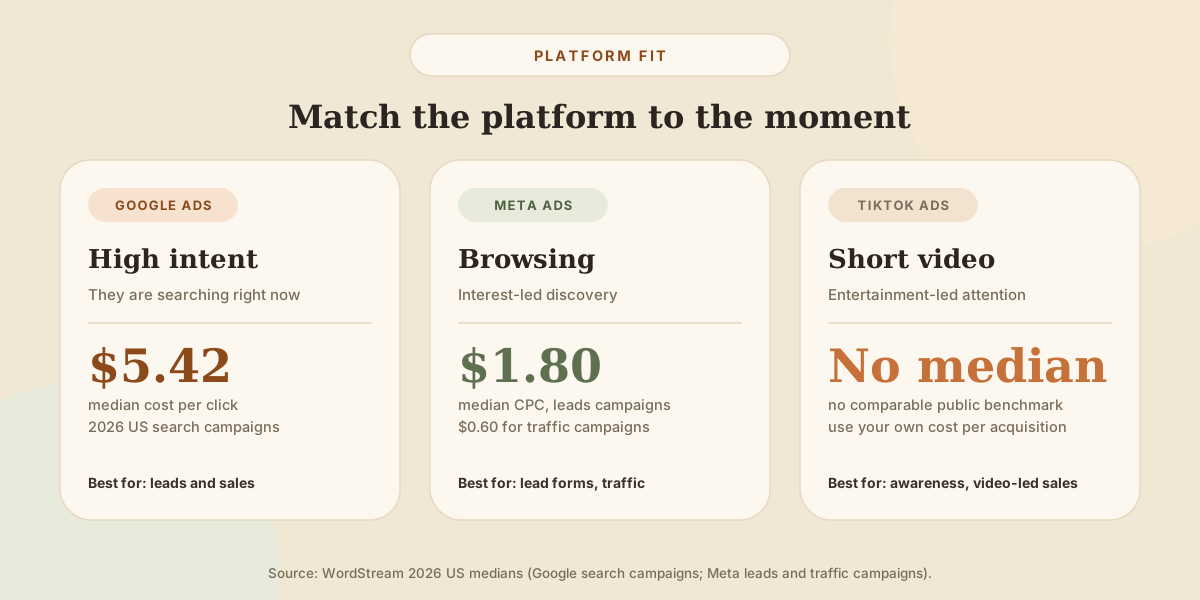
Table 3: Platform fit and 2026 US median benchmarks. Sources: WordStream Google Ads benchmarks and WordStream Facebook Ads benchmarks.
| Platform | Buyer mindset | Best-fit objective | 2026 US median benchmark |
|---|---|---|---|
| Google Ads (search) | High intent: actively searching | Leads and sales from existing demand | CTR 6.64%, CPC $5.42, conversion rate 8.18%, cost per lead $66.69 |
| Meta Ads (Facebook, Instagram) | Browsing: interest-led discovery | Lead forms, traffic, promotions | Leads: CTR 2.70%, CPC $1.80, conversion rate 8.54%, cost per lead $27.39. Traffic: CPC $0.60 |
| TikTok Ads | Entertainment-led short video | Awareness, traffic, conversions through video creative | No comparable public median. Use your own cost per acquisition |
| LinkedIn Ads | Professional targeting by role and industry | B2B leads and pipeline | No comparable public median. Use your own cost per qualified lead |
Two points matter. First, Google's average CPC is more than double its 2016 level and more than double Meta's, so channel mix has a real budget impact. Second, cheaper clicks do not guarantee cheaper customers. Lead quality differs by platform, so specialists judge channels by cost per qualified lead or revenue, not CPC alone. For a deeper comparison, see our guide to Meta ads vs Google ads.
Benchmarks are US medians in USD and vary by industry, country and objective. Treat them as a reference point, not a target.
How does a paid ads specialist track results?
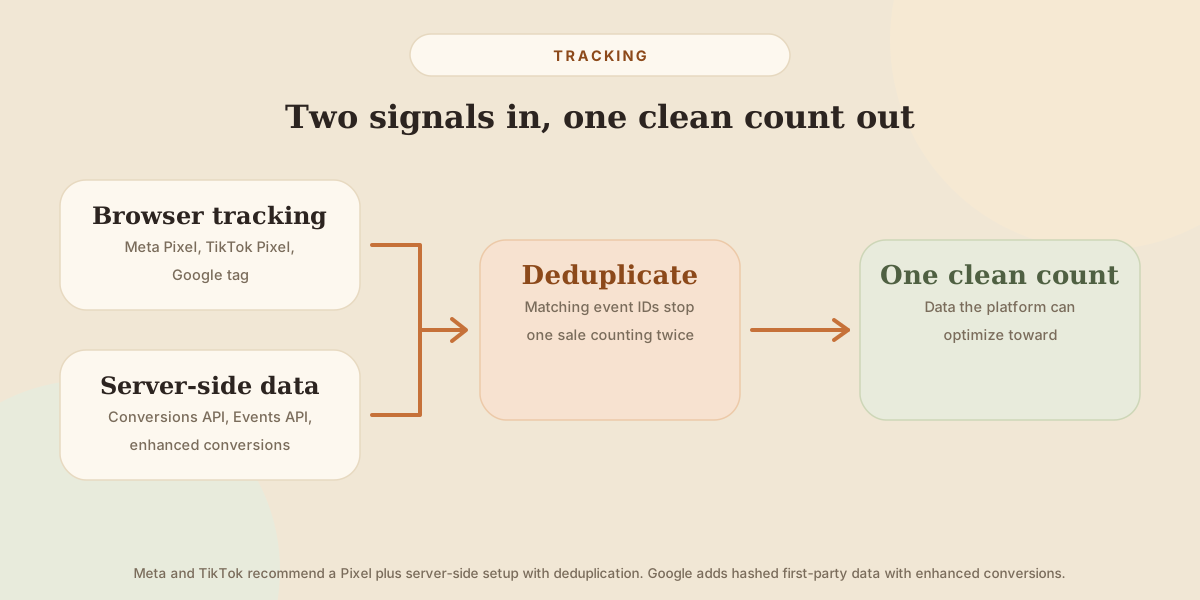
Tracking is where weak accounts usually fail. Every major platform now recommends combining browser tracking with server-side data:
- Meta: Meta recommends running the Conversions API alongside the Meta Pixel. Events are deduplicated when the browser event ID matches the server event ID (Meta for Developers).
- TikTok: TikTok advises using its Pixel and Events API together with deduplication, and requires one of them for the Web Conversions objective (TikTok for Business Help).
- Google: Enhanced conversions send hashed first-party data, such as email addresses, to improve conversion measurement. A version for web and a version for offline leads both exist (Google Ads Help).
With clean data in place, the specialist reads five core metrics together.
Table 4: The five core paid ads metrics
| Metric | Formula | What it tells you |
|---|---|---|
| Click-through rate (CTR) | Clicks / impressions | How compelling the ad and targeting are |
| Cost per click (CPC) | Spend / clicks | The price of traffic |
| Conversion rate | Conversions / clicks | How well the page and offer convert |
| Cost per acquisition (CPA) or lead (CPL) | Spend / conversions | What one customer or lead costs |
| Return on ad spend (ROAS) | Revenue from ads / ad spend | Revenue returned per dollar spent |
The metrics diagnose each other. A high CTR with a low conversion rate points to a page or offer problem, not an ad problem.
What do you get each week and month?
Table 5: Paid ads specialist deliverables by cadence
| Cadence | Tasks | Deliverable |
|---|---|---|
| Daily | Check pacing, disapprovals and anomalies. Adjust bids, budgets and negatives | Accounts that stay on pace |
| Weekly | Launch creative tests, review search terms and audiences, update the test log | Report on spend, CPA, ROAS, changes and next week's plan |
| Monthly | Reallocate budget across campaigns, audit tracking, review landing pages | Performance review and budget recommendation |
| Quarterly | Re-check account structure, attribution and goals against revenue | Strategy refresh and testing roadmap |
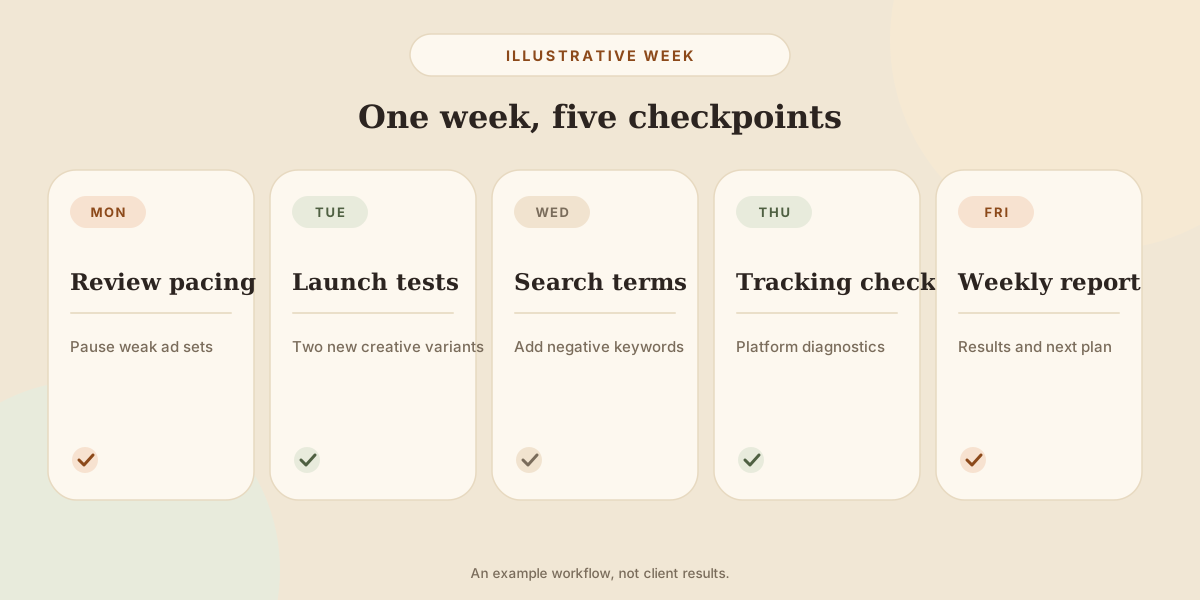
Illustrative week (an example workflow, not client results): Monday, review weekend pacing and pause weak ad sets. Tuesday, launch two new creative variants in the top campaign. Wednesday, review search terms and add negatives. Thursday, check tracking health in each platform's diagnostics. Friday, send the weekly report with next week's test plan. WordStream recommends auditing campaigns monthly at a minimum, because most changes take about 30 days to settle.
How is AI changing the paid ads specialist's role?
Features such as Google's Performance Max and AI Max and Meta's Advantage+ automate bidding, audience expansion and ad assembly. Automation does not remove the specialist. It moves the work upstream.
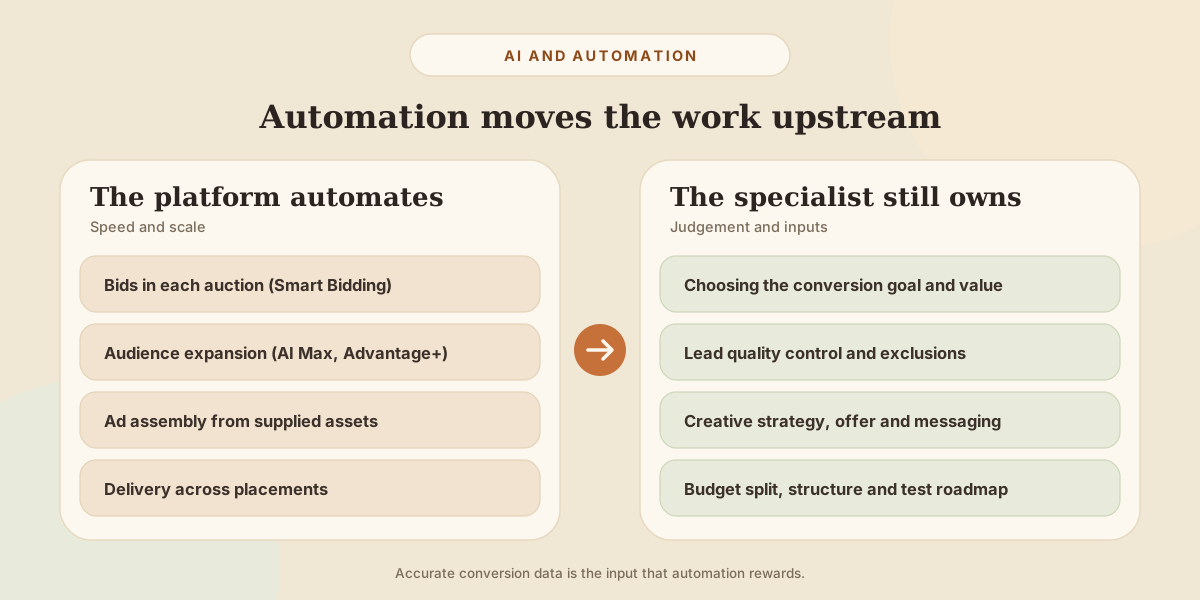
Table 6: What platform automation handles and what the specialist still owns
| The platform automates | The specialist still owns |
|---|---|
| Bid adjustments in each auction (Smart Bidding) | Choosing the right conversion goal and value |
| Audience expansion (AI Max, Advantage+) | Lead quality control and exclusions |
| Ad assembly from supplied assets | Creative strategy, offer and messaging |
| Delivery across placements | Budget split, account structure and testing roadmap |
WordStream advises mixing automated campaign types with manually controlled ones, and rolling Advantage+ features in gradually rather than all at once. Automation rewards the advertiser who feeds it accurate conversion data, which is exactly the specialist's job.
How much does a paid ads specialist cost?
The US Bureau of Labor Statistics does not publish a separate wage for paid ads specialists. The closest category is market research analysts and marketing specialists, which O*NET links to search marketing strategists. Use these US figures as a market reference, not a quote.
Table 7: US pay benchmarks, May 2025. Sources: BLS, market research analysts and BLS, advertising, promotions and marketing managers.
| BLS category | Median annual pay (May 2025) | Note |
|---|---|---|
| Market research analysts and marketing specialists | $78,760 | Lowest 10% earned under $43,390. Highest 10% earned over $155,480 |
| Advertising, promotions and marketing managers | $165,780 | Management level, plans programs and budgets |
| All US occupations | $50,980 | Baseline for comparison |
Ad spend is separate from the specialist's cost. Specialists are paid by salary, hourly rate, flat retainer or a share of ad spend. A percentage of spend can reward spending more rather than spending better, so a flat or hourly fee often keeps incentives aligned with efficiency. Salary figures also exclude payroll taxes, benefits and software, and rates differ by country and hiring model.
When should you hire a paid ads specialist?
Hire when one or more of these is true:
- Your ad budget is steady enough that a small efficiency gain pays for the role.
- Nobody reviews your accounts daily.
- Your cost per acquisition keeps drifting up and no one can explain why.
- You run two or more platforms with inconsistent tracking.
- You have no weekly creative testing rhythm.
If you are weighing a specialist against an agency retainer, read our guide on when to hire a paid ads specialist vs an agency. If your bigger gap is organic content and community, a social media VA may be the better first hire, and our guide explains what a social media VA can manage. Paid and organic search also work together, which is why many teams pair paid ads with an SEO VA. See what an SEO VA does for that side of the mix.
How do you vet a paid ads specialist?
Table 8: What to check and what proof to ask for
| What to check | Proof to ask for |
|---|---|
| Platform depth | A live walkthrough of an account they have managed, with permission |
| Tracking skill | An explanation of their pixel, server-side and enhanced conversion setup |
| Spend experience | Verified history at budgets similar to yours |
| Testing discipline | A sample test log with hypotheses and outcomes |
| Reporting | A sample weekly report tying spend to revenue or qualified leads |
| Account ownership | Confirmation that you own the accounts and billing |
At Nomad VAs, a candidate completes a live account audit as the test task, and we verify spend history and platform certifications and take client references before anyone reaches a shortlist. You can read how we vet for the full process.
Frequently asked questions
What is the difference between a paid ads specialist and a media buyer?
The titles overlap heavily. A media buyer is usually defined by planning and purchasing ad placements and managing budgets, often on social and programmatic channels. A paid ads specialist typically owns the whole loop: campaign build, creative testing, conversion tracking and reporting. Employers use both labels loosely, so compare job scope and past accounts rather than titles.
What ad spend do you need before hiring a paid ads specialist?
There is no universal minimum. A practical test is whether a modest efficiency gain covers the cost of the role. As an illustrative example, if a specialist costs $2,000 a month, a 10% efficiency improvement on $20,000 of monthly ad spend is worth $2,000. Below that level, a part-time engagement or a one-off account audit is usually more sensible. Ad spend is always separate from the specialist's fee.
Do paid ads specialists design the creative?
They brief and iterate on creative. Most can write ad copy, structure A/B tests and produce simple static ads from your existing brand assets. Heavier production, such as polished video, usually needs a designer or editor, so a good setup pairs the specialist with one when a campaign calls for it.
Can one paid ads specialist run Google, Meta and TikTok at once?
Yes, at moderate spend. One person can manage two or three platforms when budgets are steady and tracking is clean. As spend grows or you add creative-heavy channels such as TikTok, splitting the work between a media buyer, a creative strategist and an analyst usually improves results. Our paid ads specialists can be engaged part time for one or two platforms or full time across every channel.
Who should own the ad accounts?
You should. The specialist should work inside your own ad accounts and business manager under your billing, so your data, audiences, pixel history and payment methods stay with your business if the engagement ends. Be cautious about any arrangement where an agency or freelancer owns the account.
Sources
- IAB: Digital Ad Revenue Climbs to Nearly $300B (2025 Internet Advertising Revenue Report, conducted by PwC)
- MediaPost: IAB: Ad Revenue Reached $294.6B In 2025
- Exchange4media: Global ad revenue to grow 8.9% by end of 2026: WPP Media
- WordStream: Google Ads Benchmarks 2026
- WordStream: Facebook Ads Benchmarks 2026
- Google Ads Help: About enhanced conversions
- Meta for Developers: Handling Duplicate Pixel and Conversions API Events
- TikTok for Business Help: About Events API
- US Bureau of Labor Statistics: Market Research Analysts, Occupational Outlook Handbook
- US Bureau of Labor Statistics: Advertising, Promotions, and Marketing Managers, Occupational Outlook Handbook
- O*NET OnLine: 13-1161.01 Search Marketing Strategists