When to Hire a Paid Ads Specialist vs an Agency
 Joshua Yanong
·
Published 1 October 2026
·
Updated 7 October 2026
·
12 min read
Joshua Yanong
·
Published 1 October 2026
·
Updated 7 October 2026
·
12 min read
Joshua is the founder of Nomad VAs. He manages local and national SEO campaigns, on-page optimization, and keyword strategy across multiple client accounts, and personally vets every SEO VA the company places.
Key facts: paid ads specialist vs agency at a glance
What is the difference between a paid ads specialist and an agency?
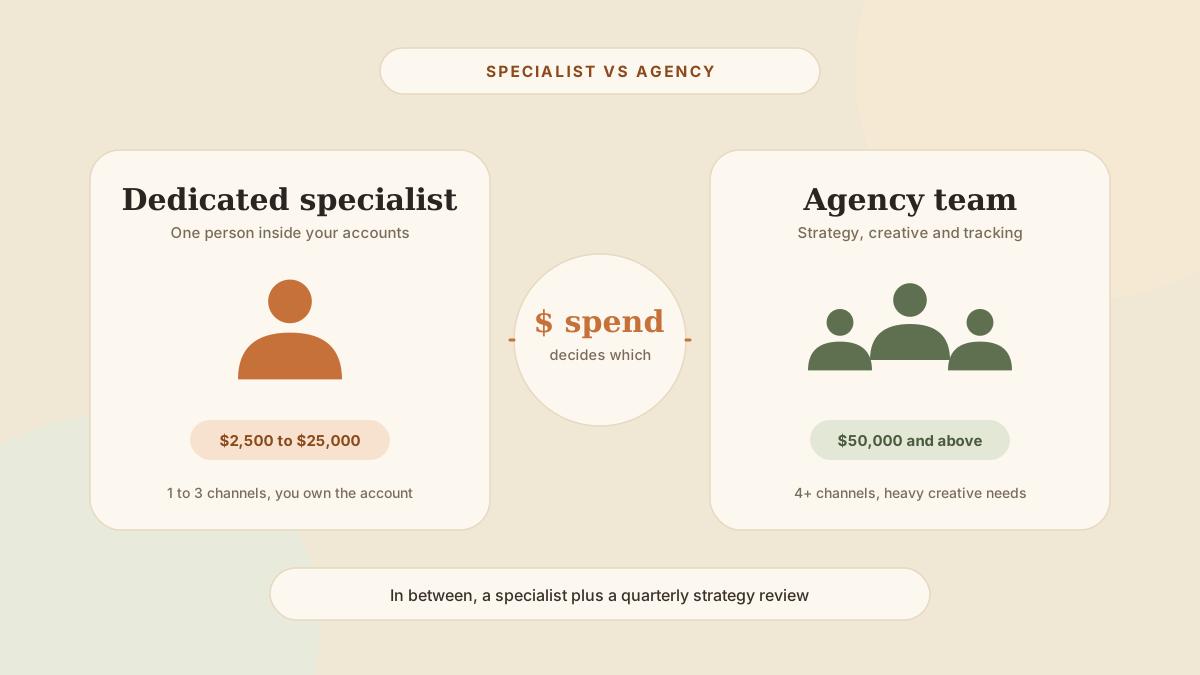
A paid ads specialist is one person, often called a media buyer or PPC specialist, who builds, launches and optimizes campaigns on platforms such as Google Ads and Meta. An agency is a team, usually an account manager plus strategists, creatives and analysts, serving many clients under one contract. Our paid ads specialist role breakdown lists the day-to-day tasks. The practical difference is focus versus coverage.
Table 1: Paid ads specialist vs agency: side-by-side comparison
| Factor | Dedicated paid ads specialist | Agency |
|---|---|---|
| Team | One person working inside your accounts | Account manager plus strategists, designers and analysts |
| Best for | One or two channels, steady spend, hands-on optimization | Multi-channel programs, creative production, complex tracking |
| Attention | Focused on a small number of accounts | Shared across a client roster, so it depends on the account manager's load |
| Cost model | Hourly, monthly or salaried | Flat retainer, percentage of spend or a hybrid |
| Account ownership | Yours, if you set the accounts up that way | Often shared, and performance-based deals can leave the agency in control |
| Creative and landing pages | Limited unless you hire for it | Often available at a higher fee tier |
| Resilience | Key-person risk if one person is unavailable | Team cover, though account managers can rotate |
How much does a paid ads specialist or an agency cost?
Costs fall into two buckets: ad spend, which goes to the platform, and the management fee, which goes to whoever runs the account. Ask whether a quote includes ad spend. The table combines published fee benchmarks with our own arithmetic. For the wider picture on hourly rates, see our guide to how much a virtual assistant costs.
Table 2: Common paid media pricing models and benchmarks
| Model | Typical range | Watch out for |
|---|---|---|
| Percentage of ad spend | 5% to 15% (Search Engine Journal) | Fees rise as you spend more, whether or not results improve |
| Flat fee plus percentage | $500 to $2,500 flat plus a percentage (Search Engine Journal) | Check minimum monthly fees |
| Flat retainer | $2,500 to $10,000 a month (Search Engine Journal) | Scope creep when creative or tracking work is extra |
| Performance-based | Per lead or per conversion | The agency may keep ownership of the account |
| In-house employee (US) | $78,760 median wage, about $6,560 a month (BLS, proxy) | Benefits, tools, recruiting and training come on top |
| Dedicated specialist through a managed provider | Depends on hours and provider | Confirm vetting, replacement terms and who owns the accounts |
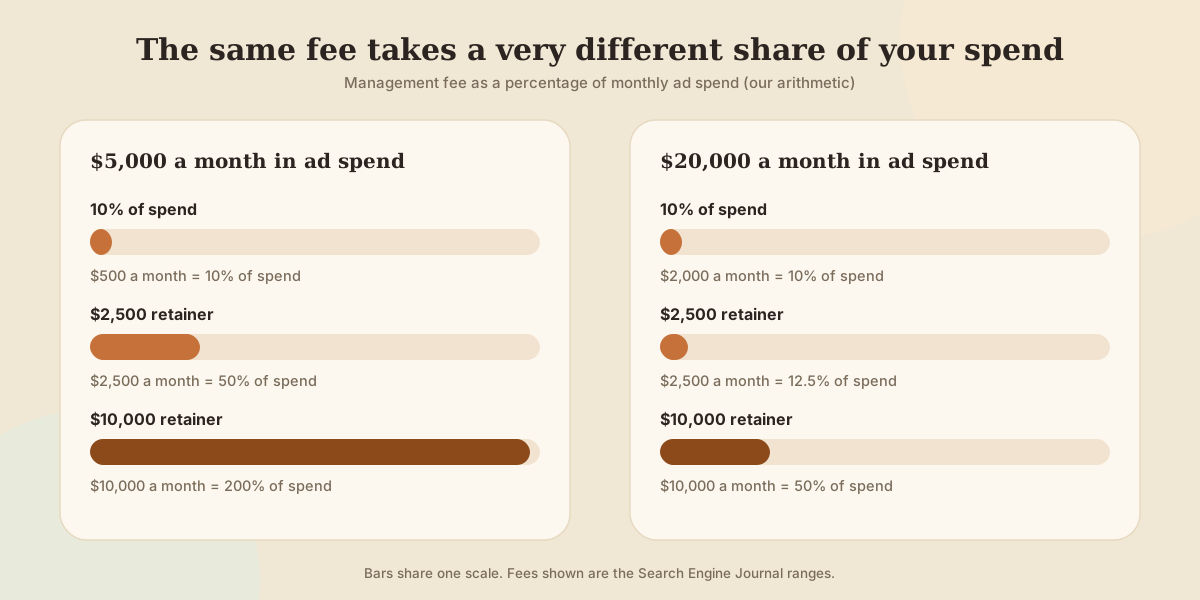
Worked example (our arithmetic): on $5,000 of monthly ad spend, a 10% fee is $500, while the low end of a flat agency retainer ($2,500) equals 50% of your media budget. On $20,000, that same retainer is 12.5% and a 10% fee is $2,000. This is why Search Engine Journal suggests budgets under $2,500 a month are often better managed in-house. See our transparent pricing page, and retainers vs percent of spend for fee structures.
Regional note: these fee and wage figures are US-centred. Ranges differ elsewhere, so request quotes in local currency.
Which option fits your monthly ad spend?
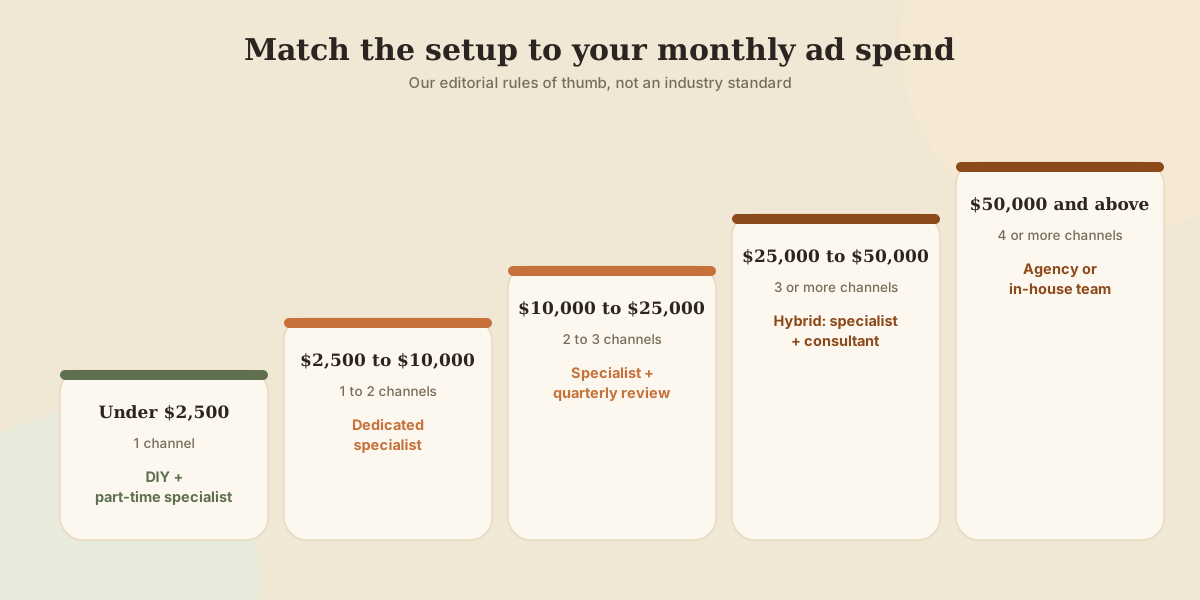
Spend is the fastest filter. These tiers are our editorial rules of thumb, not an industry standard, and assume tracking is already in place.
Table 3: Recommended setup by monthly ad spend
| Monthly ad spend | Channels | Recommended setup | Why |
|---|---|---|---|
| Under $2,500 | 1 | DIY, plus a part-time specialist for setup or an audit | Agency fees can consume the budget |
| $2,500 to $10,000 | 1 to 2 | Dedicated specialist | Hands-on optimization without agency overhead |
| $10,000 to $25,000 | 2 to 3 | Dedicated specialist plus a quarterly strategy review | Spend justifies deeper testing and oversight |
| $25,000 to $50,000 | 3 or more | Hybrid: specialist executes, senior consultant or agency sets strategy | Complexity outgrows one person |
| $50,000 and above | 4 or more | Agency or in-house team, with specialists as executors | Needs creative, analytics and cross-channel planning |
Not sure which channels deserve your first dollars? Our comparison of Meta Ads vs Google Ads and the wider Google, Meta and TikTok ads guide help you narrow the list before you hire anyone.
Why does ad spend decide how many campaigns you can run?
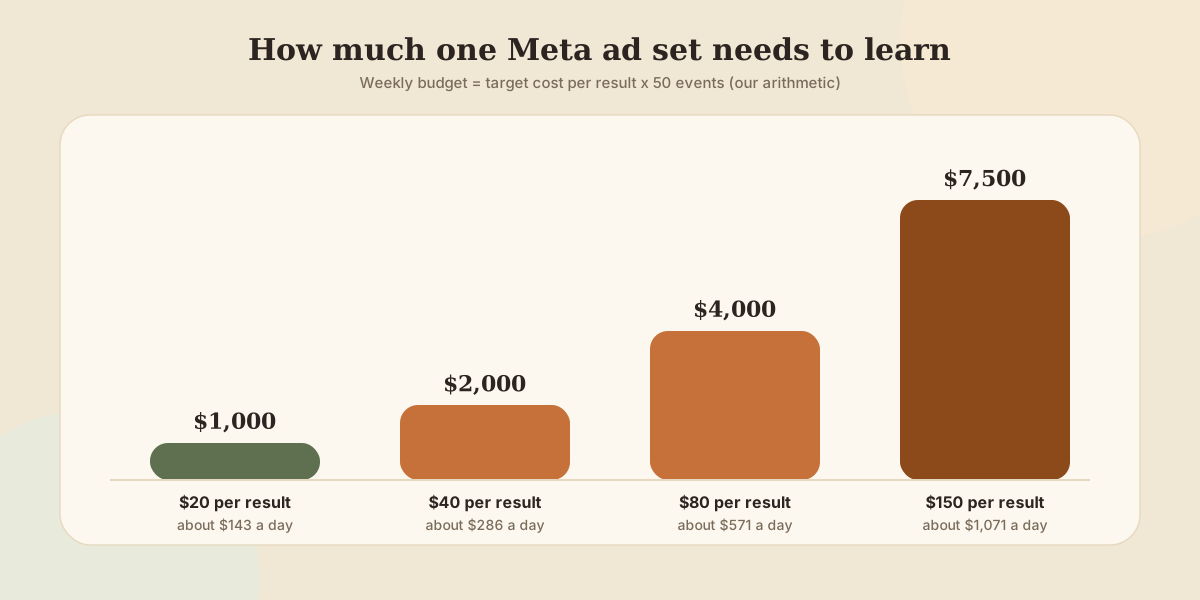
Ad platforms optimize only after they collect enough conversion data. Meta's Help Center describes roughly 50 optimization events per ad set in the week after the last significant edit, and Google's guidance for Smart Bidding experiments points to at least 30 conversions in the last 30 days. Using Meta's figure, the minimum weekly budget per ad set is your target cost per result multiplied by 50, and the daily figure is that number divided by seven.
Table 4: Minimum budget for one Meta ad set to reach about 50 events a week (our arithmetic)
| Target cost per result | Weekly budget per ad set | Approx. daily budget |
|---|---|---|
| $20 | $1,000 | $143 |
| $40 | $2,000 | $286 |
| $80 | $4,000 | $571 |
| $150 | $7,500 | $1,071 |
At a $40 cost per lead, a $3,000 monthly budget (about $100 a day) buys roughly 17 events a week for a single ad set, well short of 50. That is a structural limit, not a talent problem. At low budgets, consolidate campaigns and fix measurement first with our guide to setting up conversion tracking, and read how long to run ads before judging results. Meta can change these thresholds, so confirm them in its Help Center.
Who should own your ad accounts?
Whichever option you choose, your business should own the ad accounts, pixels and analytics properties. Google Ads Help states that a client account keeps its own data and can unlink a manager, and that a manager who links an existing account does not receive ownership by default. Search Engine Journal warns that performance-based deals often mean the agency retains the account. Use this checklist:
- Create the accounts under your own business email and billing profile.
- Keep Admin access with at least two people. Google notes you can lose access to tags if a single administrator becomes unavailable.
- Give your vendor Standard access, or link their manager account without ownership.
- Keep your own analytics property and conversion definitions.
- Add an exit clause covering campaign data, audiences and creative files.
Table 5: Google Ads access levels and who should hold them
| Access level | Who should hold it | Why |
|---|---|---|
| Admin | Two people at your company | Can grant access, change levels and unlink managers (Google Ads Help) |
| Standard | Your specialist or agency | Lets them run campaigns without control over who else has access |
| Billing | Your finance lead | Admin or Billing users can update payments profile details |
| Read-only | Executives and analysts | Visibility without edit rights |
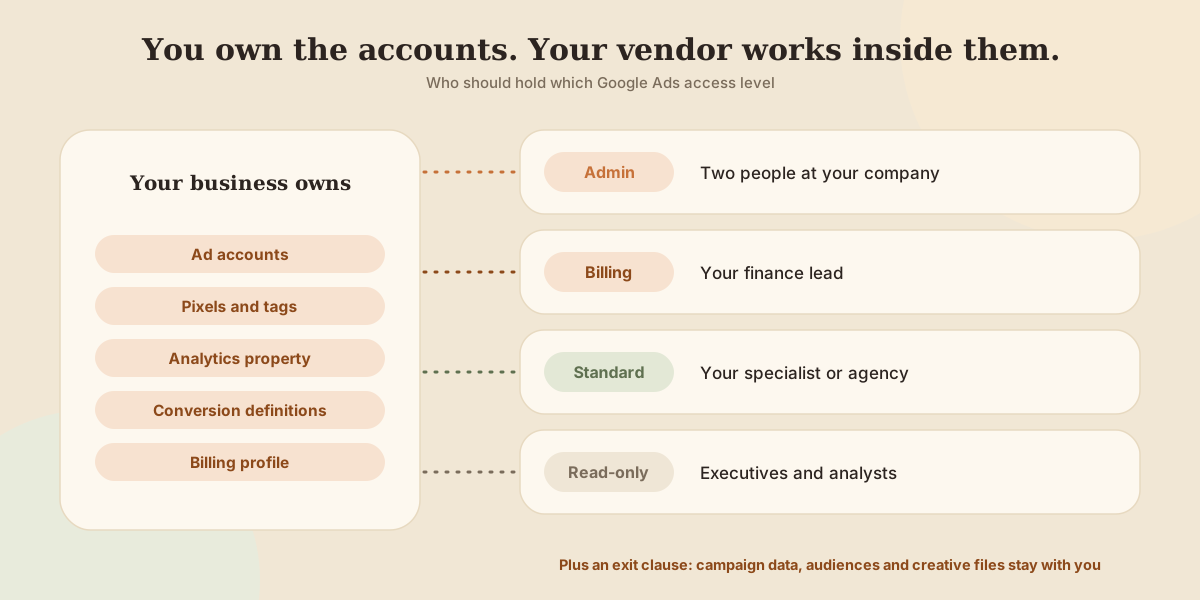
On Meta, TikTok and LinkedIn, your business owns the account and the vendor is added as a partner or user.
What are the risks of each option, and how do you reduce them?
Table 6: Main risks and mitigations
| Risk | More likely with | How to reduce it |
|---|---|---|
| One person is unavailable | Specialist | Document campaigns, keep SOPs and agree backup cover |
| Thin attention on your account | Agency | Ask who works in your account and how many accounts they handle |
| Fees that grow faster than results | Agency (percentage fees) | Cap fees, or use a flat fee tied to scope |
| Skill gaps in creative or analytics | Specialist | Add a freelance designer or a quarterly expert review |
| Lock-in through account ownership | Agency (performance deals) | Own the accounts and write an exit clause |
How do you vet a paid ads specialist or an agency?
Ask the same questions of both and compare the answers.
- Which accounts have you managed at my spend level and in my industry? Can I speak to two references?
- Who will work in my account day to day, and how many other accounts do they handle?
- Who owns the ad accounts, pixels and data, and how do we part ways?
- How will you structure campaigns so each one gets enough conversions to learn?
- Which conversion will you optimize for, and how will you filter low-quality leads?
- What do your weekly and monthly reports include?
- Does your fee change with my ad spend, and what is excluded?
- When would you tell me to switch to a different kind of provider?
Question eight is the best honesty test. For a fuller checklist, read what to know before hiring a paid ads specialist, then use our first-30-days onboarding plan. Our guides to virtual assistants, freelancers and agencies and direct hire vs contract-to-hire vs temporary staffing cover the wider hiring models, and you can see how we vet candidates.
Can you start with a specialist and move to an agency later?
Yes, and it is a common path. Start with a specialist while spend is modest, keep ownership of accounts and tracking, and add an agency or senior consultant when one of these triggers appears:
- Monthly spend passes about $50,000.
- You run four or more channels that need one shared strategy.
- You need production-level creative, such as video, at volume.
Large advertisers are rethinking agency spend too: Gartner's survey lists eliminating unproductive agency relationships among the most common cost-saving actions. If paid social is part of a wider program, see what a social media VA can manage and the social media VA vs in-house cost breakdown.
Where does Nomad VAs fit?
Nomad VAs is a staffing business, so weigh our view accordingly. We provide vetted paid ads specialists who work inside your tools, screened through four stages: screening, a paid skills task, a live interview and a paid trial. A dedicated specialist suits businesses in the $2,500 to $25,000 range that want focus and control. If you are running four or more channels with heavy creative needs, a full agency is likely the better fit, and we will tell you so. Browse every role on our services page or try the Founder Time Calculator.
Frequently asked questions
At what ad spend should I hire an agency instead of a specialist?
As a rule of thumb, consider an agency once monthly ad spend passes roughly $50,000, you run four or more channels, or you need creative, tracking and strategy from one team. Below about $25,000 on one or two channels, a dedicated paid ads specialist is usually the better value. These thresholds are editorial guidance, not an industry standard.
Is a paid ads specialist cheaper than an agency?
Usually, yes, for small and mid-sized accounts. Search Engine Journal reports agency flat management fees of $2,500 to $10,000 a month, or 5% to 15% of spend, while a US in-house marketing hire carries a median wage of $78,760 a year before benefits. A dedicated specialist sits between the two, depending on hours and provider.
Can one paid ads specialist run Google, Meta and TikTok?
One specialist can usually run two channels well and three with enough hours, provided tracking is already set up and creative is supplied. Beyond that, quality tends to drop. For four or more channels plus creative production, an agency or a second specialist is safer.
Who should own the ad accounts?
Your business should own every ad account, pixel and analytics property. Keep Admin access with at least two people and give your specialist or agency Standard access. Google Ads Help confirms the client account keeps its data and can unlink a manager at any time.
How long should I wait before judging a new ad campaign?
Wait until each campaign has had enough conversions to learn, not a fixed number of days. Meta's guidance is about 50 optimization events per ad set in the week after the last significant edit, and Google suggests at least 30 conversions in the last 30 days for bidding experiments. Low budgets can take weeks.
Can I start with a specialist and add an agency later?
Yes, and it is a common path. Start with a specialist while spend is modest, keep account ownership and tracking in your own hands, then add an agency or senior consultant when you pass about $50,000 a month, add channels or need production-level creative.
Sources
- Gartner: 2025 CMO Spend Survey press release (May 2025)
- Search Engine Journal: Ask A PPC: How Much Should PPC Management Cost? (April 2025)
- MediaPost: ANA Finds Commissions Persist, More For Media Than Other Services (December 2022)
- US Bureau of Labor Statistics: Occupational Outlook Handbook: Market Research Analysts
- Google Ads Help: About access levels in your Google Ads account
- Google Ads Help: About ownership of client accounts
- Google Ads Help: Finding success with Smart Bidding
- Meta Business Help Center: About the learning phase