What Is a Healthcare Virtual Assistant? Roles & HIPAA Basics
What a healthcare VA does, which roles exist, where the clinical line sits and what HIPAA-aware support really means.
 Nomad VAs Team
·
Published 6 October 2026
·
Updated 6 October 2026
·
13 min read
Nomad VAs Team
·
Published 6 October 2026
·
Updated 6 October 2026
·
13 min read
Written by the Nomad VAs team. This guide is general information, not legal advice. Confirm HIPAA and local privacy obligations with a qualified adviser.
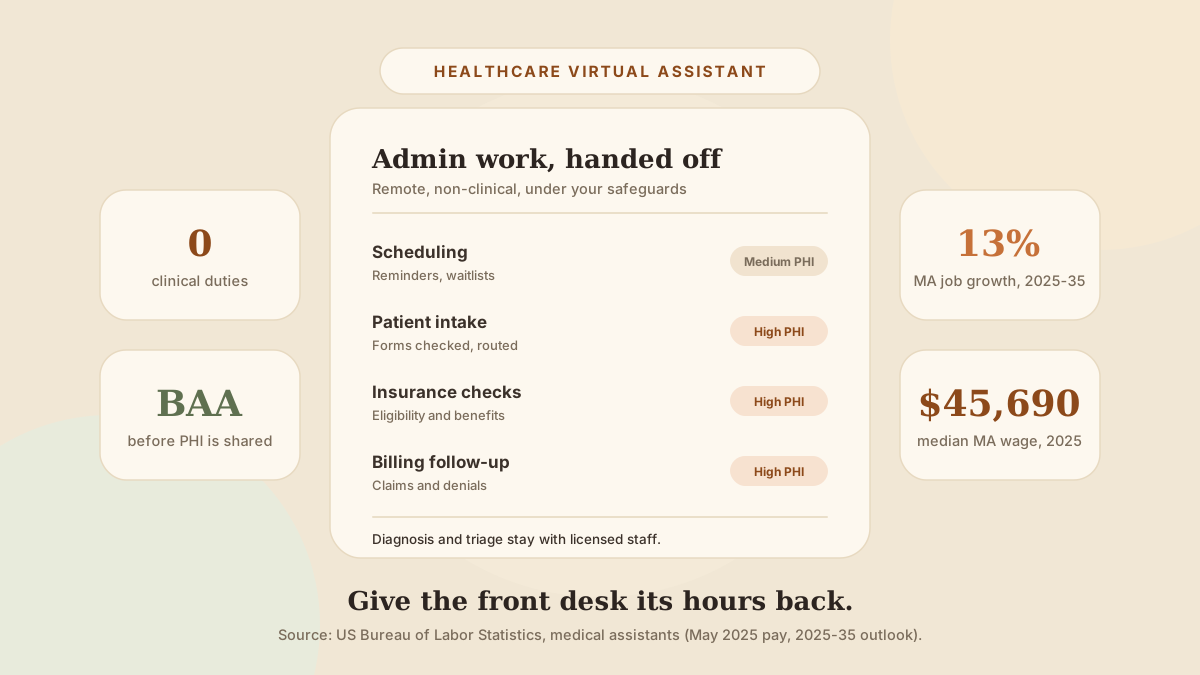
Front desks are overloaded, and the work that fills them (phones, forms, eligibility checks, claim follow-up) is repeatable and mostly digital. This guide explains what a healthcare VA does, which roles exist, where the clinical line sits, what "HIPAA-aware" really means, and how privacy rules differ in the US, Australia, the UK and Canada.
Healthcare virtual assistant at a glance
Table 1: The short answers
| Question | Short answer |
|---|---|
| What is it? | A remote administrative professional who supports a medical practice with non-clinical work. |
| Does a healthcare VA treat patients? | No. Clinical care, triage and medical advice stay with licensed staff. |
| Which US law applies? | HIPAA, which covers health care providers, health plans, clearinghouses and their business associates. |
| Is a written agreement needed? | Generally yes. HHS says a covered entity may share PHI with a business associate once it has satisfactory written assurances, usually a business associate agreement (BAA). |
| Can the VA work from another country? | HIPAA does not ban offshore vendors, but the BAA and risk analysis duties still apply. |
| What does an in-house comparison cost? | US medical assistants earned a median $45,690 a year in May 2025, before benefits and overhead (BLS). |
What does a healthcare virtual assistant do?
A healthcare VA takes over the administrative tasks that slow clinical teams down. The exact scope depends on your specialty and the access you grant, but most engagements fall into the areas below.
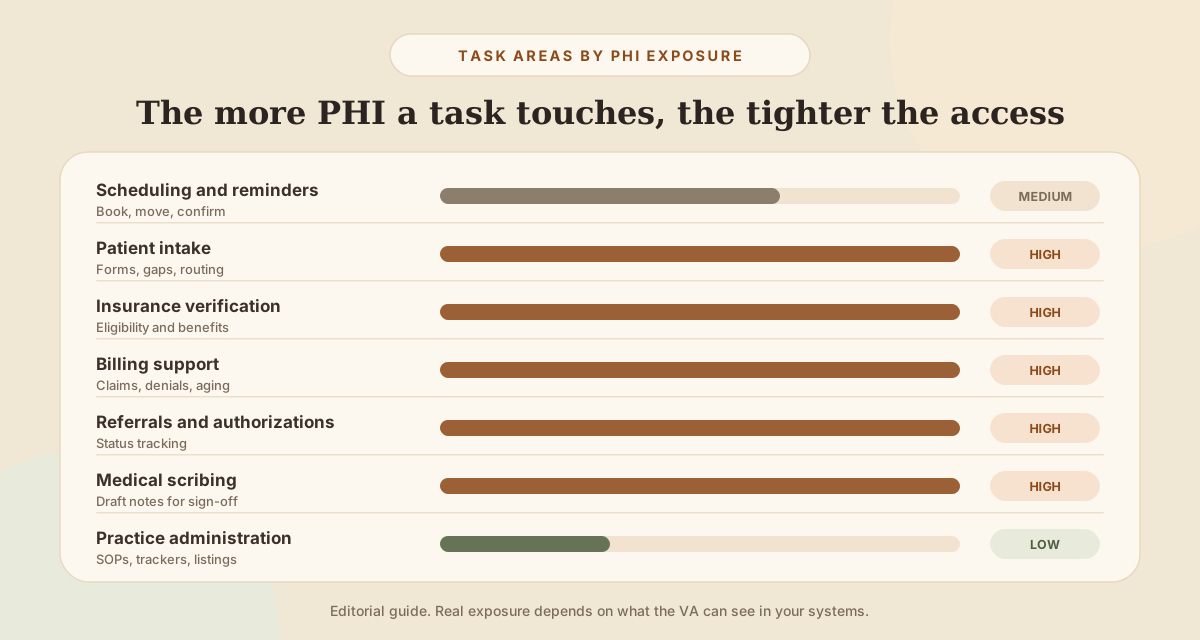
Table 2: Healthcare VA task areas and PHI exposure*
| Task area | Typical VA tasks | PHI exposure* |
|---|---|---|
| Scheduling and reminders | Book, move and confirm appointments, manage waitlists, send reminders | Medium |
| Patient intake | Send digital forms, check them for gaps, route them to clinical staff | High |
| Insurance verification | Check eligibility and benefits before visits, flag coverage gaps | High |
| Billing support | Follow up on unpaid claims, track denials, prepare aging reports | High |
| Referrals and authorizations | Track referral status and prior authorization requests | High |
| Medical scribing | Draft visit notes in the EHR from clinician dictation | High |
| Practice administration | Credentialing trackers, supply inventory, SOPs, listings and reviews | Low |
*Editorial guide. Real exposure depends on what the VA can see.
Start with patient intake and scheduling, then setting up scheduling workflows and reducing patient no-shows.
What healthcare VA roles exist?
"Healthcare VA" is an umbrella term. Most practices hire for one core role and add others as volume grows.
Table 3: Common healthcare VA roles
| Role | Focus | Best for |
|---|---|---|
| Front-desk and scheduling VA | Calls, bookings, confirmations and reminders | Clinics with a phone backlog or high no-show rates |
| Intake and records VA | Forms, document chasing and non-clinical chart prep | Practices where onboarding new patients is slow |
| Billing and insurance support VA | Eligibility checks, claim follow-up and denial tracking | Small practices without an in-house biller |
| Medical scribe VA | Visit documentation under clinician direction | Clinicians who chart after hours |
| Practice operations VA | SOPs, trackers, credentialing and listings | Owners who want to step out of admin |
A VA who supports billing is not a substitute for a certified coder or biller unless they hold that qualification. For documentation roles, read Medical Scribing 101. To see how Nomad VAs places this talent, browse our healthcare VAs.
What can a healthcare VA not do?
The clinical line is the most important boundary in this role. A healthcare VA supports clinicians; they never replace them.
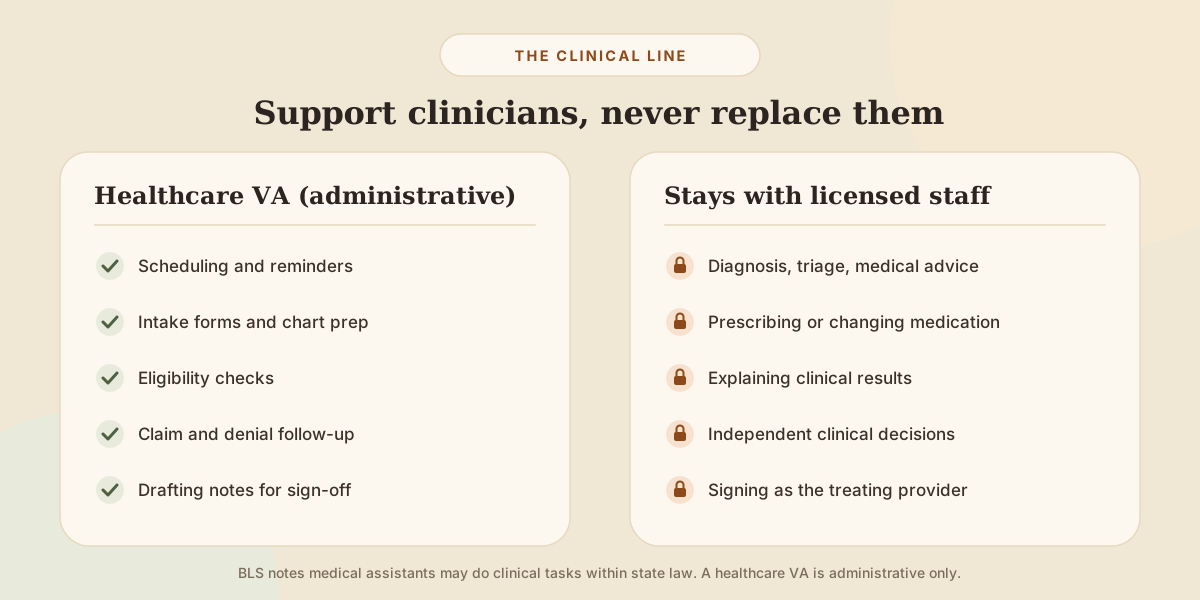
Table 4: What stays with licensed staff
| Stays with licensed staff | Why it stays |
|---|---|
| Diagnosis, triage or medical advice | These require clinical training and licensure |
| Prescribing or changing medication | Reserved for authorized prescribers |
| Explaining clinical results to patients | Needs clinical judgment and accountability |
| Independent clinical decisions | The clinician owns the decision and the record |
| Signing notes as the treating provider | Only the provider can attest to their own care |
The US Bureau of Labor Statistics (BLS) describes medical assistants as workers who complete both administrative and clinical tasks, with clinical duties limited by state law. A healthcare VA is administrative only. The full boundary guide is in what healthcare VAs can and cannot do.
How does a healthcare VA differ from a medical assistant or an in-house front desk hire?
Table 5: Healthcare VA vs medical assistant vs in-house front desk hire
| Factor | Healthcare VA | Medical assistant | In-house front desk hire |
|---|---|---|---|
| Where they work | Remote | On site | On site |
| Clinical duties | None | Yes, as state law permits | None |
| Best at | Repeatable digital admin work | Patient-facing clinical and admin support | In-person greeting, check-in and phones |
| Pay data to compare | Quote based, set by role and hours | Median $45,690 a year (BLS, May 2025) | BLS tracks secretaries and administrative assistants separately |
Demand for admin and clinical support is rising. BLS projects 13% employment growth for medical assistants from 2025 to 2035, against 3% for all occupations, and counted 833,900 medical assistant jobs in 2025. For a deeper cost view, see healthcare VA vs front desk hire and medical scribe vs medical assistant vs healthcare VA.
What does "HIPAA-aware" actually mean?
HIPAA is not a badge a person holds. It is a set of obligations that sit with covered entities and their business associates. "HIPAA-aware" means a VA works inside those obligations.
According to the HHS Privacy Rule summary, protected health information (PHI) is individually identifiable health information that relates to a person's health, their care or payment for care, held in any form: electronic, paper or spoken. Common identifiers such as a name, address, birth date or Social Security number count. Covered entities include health plans, clearinghouses and any provider that transmits health information electronically in connection with standard transactions such as claims or eligibility checks.
HHS defines a business associate as a person or organization, other than a member of the covered entity's workforce, that performs functions involving PHI on the entity's behalf, such as billing, claims processing or practice management. Business associates are directly liable for certain HIPAA provisions, and their subcontractors can be business associates too.
Whether a VA counts as workforce or a business associate depends on how the arrangement is set up, so ask your counsel.
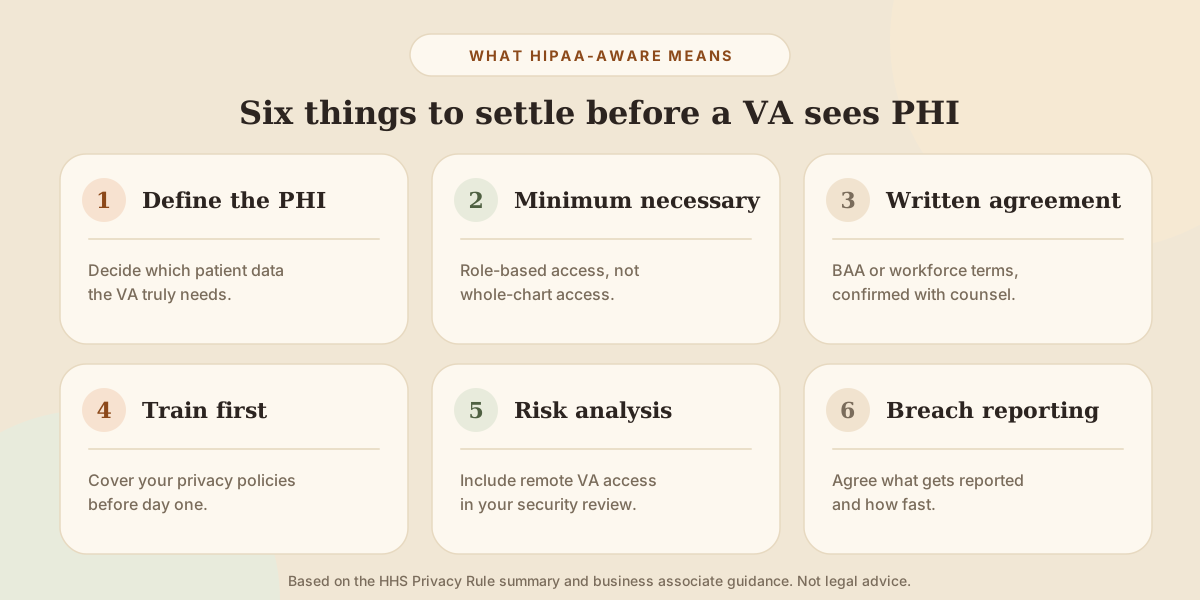
Table 6: HIPAA concepts and what they mean when you add a VA
| HIPAA concept | Plain-English meaning | What it means when you add a VA |
|---|---|---|
| PHI | Health information that identifies a person | Decide which PHI the VA truly needs |
| Minimum necessary | Use and share only the least PHI needed for the task | Give role-based access, not whole-chart access |
| Business associate agreement | Written contract with safeguards and breach duties | Put it in place before PHI is shared, unless counsel confirms an exception |
| Workforce training | Covered entities must train their workforce on privacy policies | Train the VA on your policies before day one |
| Security risk analysis | A required review of risks to electronic PHI | Include remote VA access in your analysis |
| Breach reporting | BAAs must require reporting of security incidents and breaches | Agree what gets reported and how fast |
The stakes are real. Under the HHS summary, knowingly obtaining or disclosing identifiable health information in violation of the Privacy Rule can bring criminal penalties of up to $50,000 and one year in prison. That rises to $100,000 and five years with false pretenses, and to $250,000 and 10 years where the intent is commercial advantage, personal gain or malicious harm.
For the full legal picture, read HIPAA basics for practices working with virtual assistants and what is protected health information.
Can a healthcare VA work from outside the United States?
Often yes, with conditions. In an HHS FAQ on cloud providers, OCR says the HIPAA Rules allow a vendor that stores ePHI on servers outside the US, provided a BAA is in place and the other requirements are met. OCR adds that the risks may vary greatly by location and should be weighed in the Security Rule risk analysis. That FAQ addresses data storage, but the same logic is a sensible guide for remote staff access.
Other rules can be stricter than HIPAA. An HHS Office of Inspector General review of offshore outsourcing of administrative functions found that US states handle the issue differently for Medicaid. Payer contracts can add limits too.
Practical safeguards for any remote VA:
- Give each VA unique logins and multi-factor authentication.
- Restrict PHI to practice-approved systems and keep it off personal devices.
- Review access logs on a set schedule.
How do privacy rules differ in the US, Australia, the UK and Canada?
If your patients or team sit outside the US, the framework changes. This table is an overview, not legal advice.
Table 7: Health data privacy frameworks by region
| Region | Main framework | How health data is treated | Practical note |
|---|---|---|---|
| United States | HIPAA | PHI held by covered entities and business associates | Use a BAA with vendors that handle PHI |
| Australia | Privacy Act 1988 and the Australian Privacy Principles | Health information is "sensitive information" with stricter rules, according to the OAIC | Applies to health service providers that handle patient information |
| United Kingdom | UK GDPR and the Data Protection Act 2018 | Health data is special category data, so you need an Article 6 lawful basis plus an Article 9 condition | The ICO notes a DPIA is more likely for special category data |
| Canada | PIPEDA plus provincial laws | Several provinces have health information laws deemed substantially similar to PIPEDA, such as Ontario's PHIPA | Which law applies depends on the province and the organization |
How much does a healthcare VA cost compared with an in-house hire?
Rates vary by role and hours, so this guide quotes no VA price. As an in-house benchmark, BLS reports a median wage of $45,690 a year, or $21.97 an hour, for US medical assistants in May 2025.
Table 8: In-house medical assistant vs remote healthcare VA
| Cost item | In-house medical assistant | Remote healthcare VA |
|---|---|---|
| Base pay | Median $45,690 a year (BLS, May 2025) | Quote based, set by role and hours |
| Employer extras | Payroll taxes, benefits, equipment, space and training sit on top of wages | Depends on the agreement, so confirm what is included |
| Coverage | Fixed on-site shifts | Flexible hours and time zones by agreement |
| Clinical tasks | Yes, as state law permits | No |
Wage data excludes benefits and overhead. See our pricing for current options, read how much a virtual assistant costs in 2026 for the wider picture, and compare staffing models in our guide to direct hire vs contract-to-hire vs temporary staffing.
How do you start with a healthcare VA?
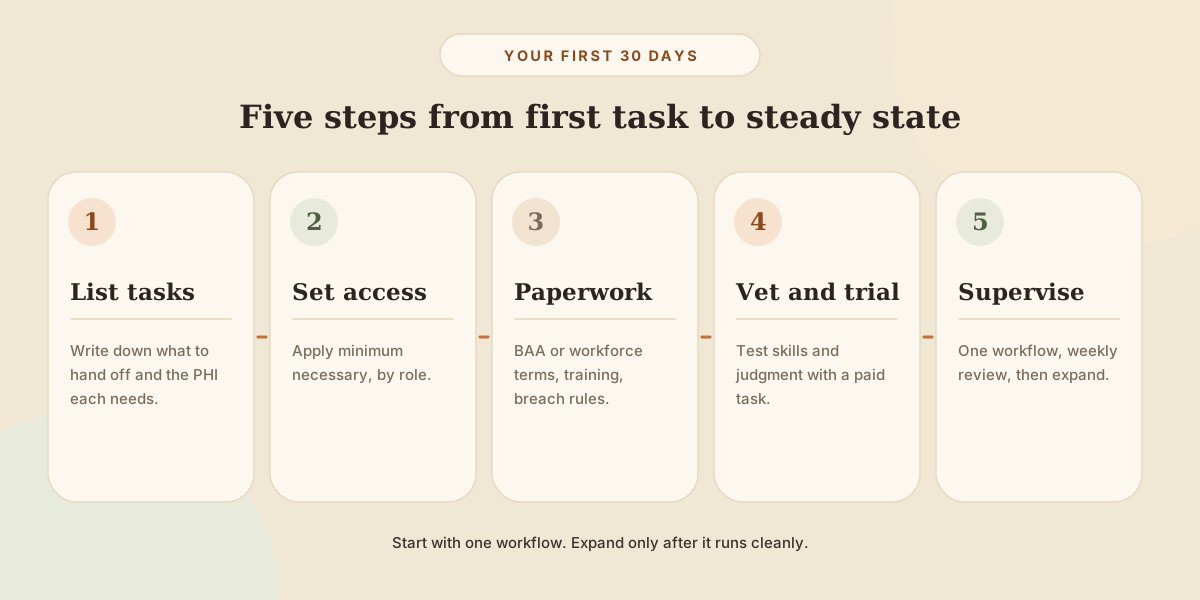
- List the tasks and the PHI each one needs. Write down what you want to hand off. Our free SOP and job description generator turns that list into a clear brief.
- Set access by role. Apply the minimum necessary rule. A scheduling VA does not need billing records, and a billing VA does not need clinical notes.
- Put the paperwork in place. Settle the BAA or workforce arrangement with counsel, record the privacy training and agree breach reporting terms.
- Vet and trial. Check skills, reliability and judgment with a paid task. See how we vet and the 4-stage screening framework.
- Run a supervised 30 days. Start with one workflow, review output weekly and expand only after it is stable. The first-30-days plan covers each week.
What should you ask before you hire?
- How do you handle PHI, and what access will my VA need?
- Will you sign a BAA, or how do you suggest we structure the relationship?
- What privacy and security training does each VA complete?
- How are devices, logins and multi-factor authentication managed?
- What is your breach reporting process and timeline?
A longer list is in questions to ask before outsourcing medical admin work.
The bottom line
A healthcare virtual assistant is a remote administrative professional, not a clinician. The best results come from a narrow starting scope, minimum necessary access, written agreements and a supervised first month. Done well, a healthcare VA gives your team back hours every week.
Ready to see which role fits your practice? Book a Discovery Call using the button above, or explore the roles we place.
Frequently asked questions
Are healthcare virtual assistants HIPAA compliant?
HIPAA compliance is something a practice and its vendors do, not a badge a person holds. A healthcare VA works in a HIPAA-aware way when the practice puts a BAA or workforce arrangement in place, limits access to the minimum necessary, trains the VA and includes remote access in its security risk analysis.
What can a medical virtual assistant do?
A medical virtual assistant handles administrative work: scheduling and reminders, patient intake, insurance verification, billing follow-up, referral tracking and documentation support. It does not include diagnosis, triage, prescribing or medical advice, which stay with licensed clinical staff.
Can a virtual assistant do medical scribing?
Yes, as documentation support under clinician direction. A remote scribe drafts visit notes in the EHR from dictation or audio the practice provides, and the clinician reviews and signs. Because it is a high-PHI task, the BAA, limited access and accuracy checks matter. See Medical Scribing 101.
Does a healthcare VA need a business associate agreement?
In many arrangements, yes. HHS says a covered entity may disclose PHI to a business associate once it has satisfactory assurances, usually a written BAA. Whether a given VA is a business associate or part of your workforce depends on the setup, so confirm with your counsel.
Can a healthcare VA work from outside the US?
HIPAA does not prohibit offshore vendors. HHS says a BAA and the other HIPAA requirements still apply, and that location-related risk should be considered in the risk analysis. Some payer contracts and state programs add limits, so check yours first.
How much does a healthcare VA cost?
Rates depend on role, hours and engagement model. For context, BLS reports a median wage of $45,690 for US medical assistants in May 2025, before benefits and overhead. See our pricing page for current Nomad VAs options.
Sources
- HHS: Summary of the HIPAA Privacy Rule
- HHS: Business Associates
- HHS: FAQ on ePHI stored outside the United States
- HHS OIG: Offshore Outsourcing of Administrative Functions (OEI-09-12-00530)
- BLS Occupational Outlook Handbook: Medical Assistants
- BLS Occupational Outlook Handbook: Secretaries and Administrative Assistants
- OAIC: Guide to Health Privacy
- ICO: Special category data
- Office of the Privacy Commissioner of Canada: Provincial legislation deemed substantially similar to PIPEDA